If 2025 reinforced anything, it’s that bridge owners and project teams are being asked to do more with less time: deliver safer infrastructure, reduce closures, document decisions, and build for resilience—often all at once. Heading into 2026 and beyond, the “how” of bridge delivery is changing just as quickly as the “what.”
The next wave is being shaped by two forces moving in tandem: rising demand (funding, backlog, and a steady pipeline of upgrades) and rapid innovation (AI-enabled workflows, digital twins, smarter inspection tools, and modular delivery).
At U.S. Bridge, we’re treating this shift as an opportunity to be even more client-centric—helping agencies, engineers, and contractors reduce risk, compress schedules, and build durable steel bridge solutions that fit real-world constraints.
In 2026+, Expect Bridge Projects to Prioritize:
- Digital delivery (AI-assisted workflows, digital twins, and stricter documentation expectations).
- Smarter inspections (non-contact sensors, laser scanning, robotics, and predictive maintenance).
- More prefabrication and modular assembly to cut closure time and improve quality control.
- “Sensor-ready” assets and structural health monitoring as owners shift from reactive to planned maintenance.
- Continued market growth, with major forecasts projecting bridge construction expansion through 2030.
The Outlook: Demand isn’t Slowing Down
Even with ongoing work across the country, the need remains urgent. Industry reporting points to continued backlogs and rising awards for highway/bridge projects—one signal that procurement volume is staying strong heading into 2026.
On the market side, one widely cited global forecast estimates $822.8B (2024) growing to $1.1T by 2030 (4.7% CAGR), underscoring sustained long-term investment.
What this means for owners and contractors: competition will increasingly reward teams that can deliver speed + certainty—not just low bid. The firms that win will be the ones who can shrink onsite time, document quality, and reduce lifecycle risk.
5 Bridge Innovations That Will Define 2026 and Beyond
1) AI Becomes a Permanent Part of Infrastructure Delivery
AI is no longer experimental in many AEC workflows. The conversation is shifting from “Should we use it?” to “Where does it reliably reduce rework and cycle time?” Industry leaders are already describing AI as embedded in workflows—and paired with digital twins and digital delivery approaches moving into 2026.
Where it shows up in bridge work:
- Faster takeoffs and schedule modeling
- More consistent document control and submittal review
- Better risk visibility across design, fabrication, and construction
2) Digital Twins Move from Buzzword to Bid Advantage
Digital twins and connected data environments help project teams carry a single source of truth from planning through operations—especially valuable when owners want stronger handoff packages and clearer maintenance histories. The “2026” trendline points directly toward this kind of connected delivery.
Owner-side payoff: fewer surprises at turnover, better lifecycle planning, and cleaner support for asset management decisions.
3) Inspection Gets Smarter (and Safer)
Inspection is evolving quickly—toward non-contact sensing, laser scanning, and robotic systems that reduce exposure risk and capture higher-quality data. Just as important: when inspection data feeds asset management systems, maintenance can become predictive instead of reactive.
Why it matters: owners are trying to prevent “small problems becoming big ones,” and better data is the only scalable way to do it.
4) Prefabrication and Modular Assembly Become the Default Answer to Closure Constraints
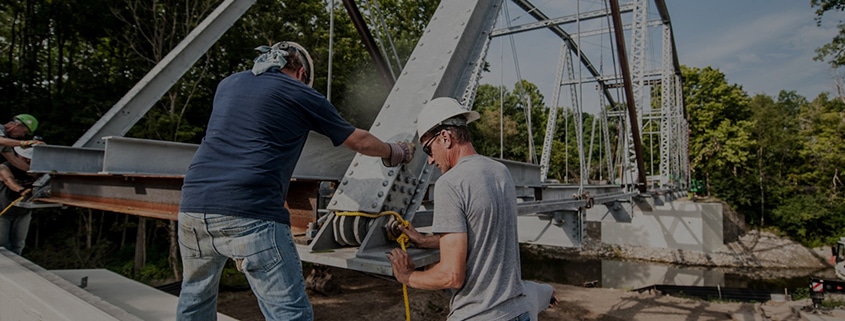
The strongest operational trend is simple: build more offsite, finish faster onsite. Modular and prefabricated methods reduce field time, increase quality control, and minimize traffic disruption—especially in projects with tight lane-closure windows.
U.S. Bridge has long focused on prefab and modular delivery—defining modular construction as work completed in a controlled environment and installed onsite, with speed and quality advantages.
5) “Sensor-Ready” Bridges and Structural Health Monitoring
The next generation of bridges will increasingly be designed with monitoring in mind—sensors embedded in components, fiber-optic lines, and systems that support continuous tracking and alerts.
Practical implication for 2026 specs: even if you’re not installing monitoring on Day 1, many owners will start asking teams to plan for it—so future upgrades don’t require expensive retrofits.
What U.S. Bridge is Doing to Stay Ahead
Being forward-looking is only useful if it makes projects easier for clients. Here’s how U.S. Bridge is aligning our offerings with what 2026+ delivery demands.
Expanding Prefab Capacity for Bigger, Faster Timelines
U.S. Bridge has been investing in expanded prefab capabilities—positioning our team to compete on larger projects and support accelerated delivery needs. That includes advanced welding lines and a modular production focus built for speed, quality control, and repeatable outcomes.
Keeping Modular Solutions Ready for Both Planned and Emergency Needs
Modular isn’t just about convenience—it’s about resilience. For example, U.S. Bridge’s Liberty Bridge is designed for containerized, quick construction and is used both as a permanent solution and for emergency response scenarios.
Supporting Accelerated Bridge Construction with Kits, Guidance, and Tools
U.S. Bridge’s content and offerings emphasize accelerated delivery: Bridge Kits engineered, designed, manufactured, and galvanized to support faster bridge construction—plus digital scoping via BridgeScope.
Quality Systems and Compliance for High-Stakes Work
Owners need confidence in fabrication and coatings—especially on larger, more complex projects. U.S. Bridge is positioned as an AISC-certified major bridge fabricator (including fracture critical and sophisticated paint systems) with experience meeting common AASHTO loadings and other standards.
A 2026-Ready Checklist for Bridge Owners and Project Teams
If you’re planning a bridge replacement or upgrade in 2026 or later, here are practical moves that reduce risk:
- Define closure constraints early (lane closure windows, detours, traffic staging) so prefab/modular options can be evaluated correctly.
- Ask for digital delivery alignment (model expectations, submittal structure, asset handoff requirements).
- Consider modular/prefab alternatives during concept—not after design is locked.
- Plan for “sensor-ready” compatibility, even if monitoring comes later.
- Prioritize quality control and coating strategy (galvanized/weathering/paint systems) based on environment and lifecycle targets.